Shared Lives Carers come in all shapes and sizes! You might be wondering what it takes to become one of them in the Southwest. The role gives you the chance to open up your own home to change someone’s life for the better so it’s well worth exploring whether it’s right for you.
In this article, we’ll share exactly what you need to sign up with Shared Lives today.
Who is eligible for Shared Lives?

It makes sense to start talking about who uses Shared Lives as a service. This is called the referral process. As a carer, you’ll be expected to provide quality work from home care for people that you match with. They will come to us through self-referral or adult social care.
The people supported by Shared Lives are just as different to each other as our carers. We support adults who:
- Live with autism
- Have learning disabilities
- Experience age-related difficulties
- Need home from hospital stays
- Have a problem with mental health
- Require support with physical disabilities
- Have a learning disability and a young child
Mid-level care is prevalent in Shared Lives where an adult needs support living their day-to-day life. This type of care is sometimes called adult fostering and is always about supporting independence and building confidence.
As a Shared Lives Carer you’ll benefit from having experience working with adults with learning and support needs. We may ask that applicants spend a little bit of time volunteering at a day centre or something similar to benefit from the experience before we progress their application.
What do you need to become a Shared Lives Carer?
You need a combination of experience, the right to work in the UK, and a spare room to become a Shared Lives Carer. The types of work that we think make great previous experience are:
- Working in a nursing or residential home
- NHS work
- Any of the blue light services
- Personal experience of care through family or loved ones
- Education in a care related qualification
- Teaching
- Foster care
- Day centre care
There’s all sorts of crossovers that may help your application. It’s worth including anything you think might show examples of your personal experience. Transferable skills come in all guises and are equally as important as having a spare room. You never know what might be relevant!
Even if you don’t think you fit into any of the boxes above, remember that one of the key qualities we’re looking for is a big heart and the desire to make a difference.
The number one requirement to become a Shared Lives Carer is that you have a spare room. This can be in a rented house with the landlord’s permission or a home that you own. The spare room will be solely for the use of the person that you are supporting. Without a spare room we won’t be able to accept your application.
Can I work and be a full-time Shared Lives Carer?
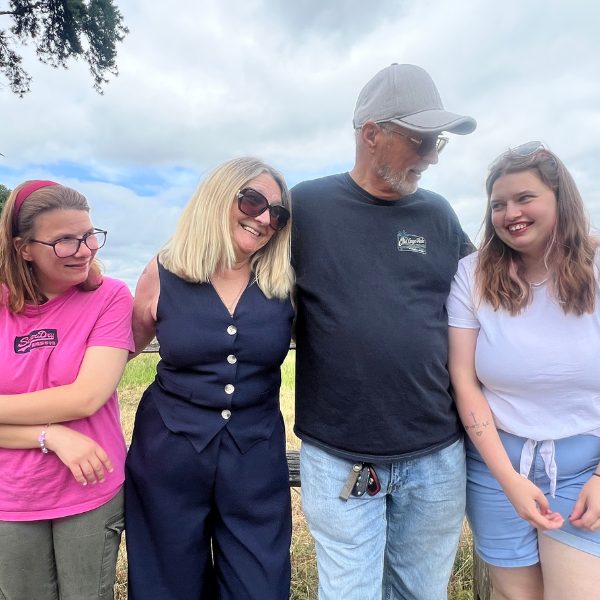
If you’re a full-time Shared Lives Carer, then it’s sometimes possible to work another job at the same time. The caring role you take on with the person you support is a full-time commitment and is also a fully paid role so it’s important that the work you do doesn’t clash.
The ability to work around a placement will depend on the care the person you are supporting requires. There will be times, potentially, where the person you support will be accessing day support or going to their own place of work. This is a piece of time where work could fit in.
It all depends on the care needs of the person you match with. You’re living together but some people may need more support than others. Independence is a sliding scale! You just need to be there if you’re needed. Many people supported access day centres, volunteering opportunities, and workplaces throughout the week.
If you’re working in social care at the moment and feel that you could offer short break stays to adults looking for a supportive living environment, get in touch! Short breaks last from a 24 hour period to a few days and can fit in nicely with someone looking to have a portfolio of employment.
Can you be a Shared Lives Carer jointly with a partner or family member?
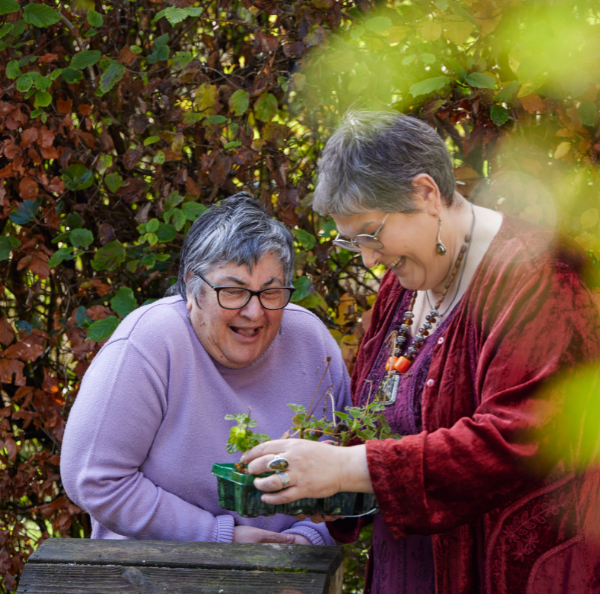
In short, yes! Having other members of your household as carers is certainly possible and can increase inclusivity and flexibility.
If you have a spouse, partner, or family member who wants to care alongside you at home, then they can go through our assessment process and become a main carer too. You can both care at home and have the same responsibilities for the person that you are supporting.
A formal support carer is a paid role that supplements the main carer(s). If you have other adults living at home or nearby who want to be there when you need support or to supplement the type of care you are giving, then this is the option for them.
Formal support carers are able to cover you and care for someone for short planned periods up to a few days. This role requires training and an application to be processed.
An informal support carer is a family friend who may spend time with the main carer and person supported. This is a casual role, is unpaid, and as such cannot be relied upon for planned cover, although they can be there with the household for activities and days out.
Can you be a Shared Lives Carer supporting a family member?
Yes, you can be related to the person you support. However, this type of support is agreed on a case-by-case basis to make sure everyone is within legal bounds and protected.
We hope you’ve enjoyed this article from Shared Lives South West. If you have any more questions about whether you’re eligible to be a carer don’t hesitate to get in touch via our contact us page on the website. Head to our YouTube channel to see real-life carer stories.